

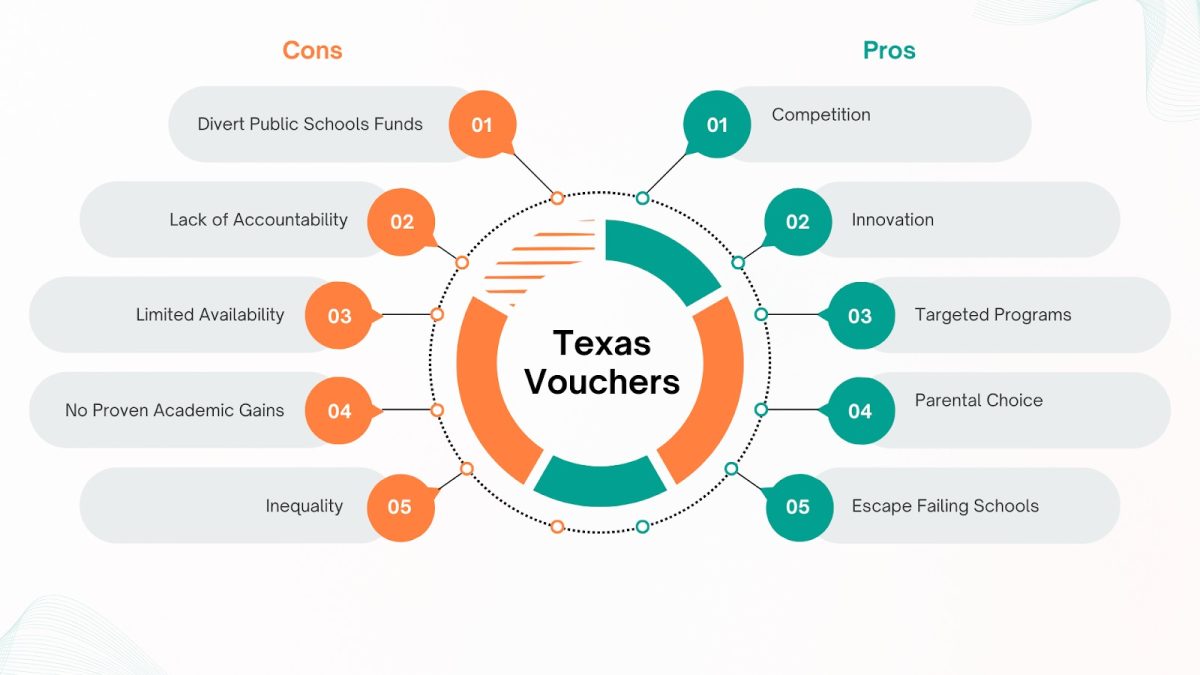
In May 2025, Texas Governor Greg Abbott signed Senate Bill 2 into law, creating the Texas Education Freedom Accounts program, otherwise known as school vouchers. Beginning in February 2026, families will be able to apply for public funds to pay for private school tuition, homeschooling expenses, tutoring, textbooks, and even therapy for the 2026-2027 school year. Supporters frame the program as a win for “parental choice,” but critics believe it poses a serious risk to Texas public schools, and the students who depend on them.
At its core, the voucher program redirects taxpayer dollars away from public schools and into private schools, which are not held to the same standards. While marketed as a solution for struggling students, the policy may ultimately deepen inequality, weaken accountability, and exclude vulnerable children from an equal education.
How the Texas Voucher Program Works
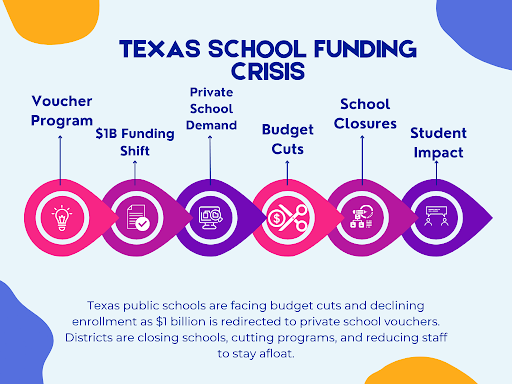
According to the Center on Budget and Policy Priorities, Texas plans to spend $1 billion on vouchers in the first two years alone, with costs expected to increase as time continues. The average family will receive around $10,000 per child each year, while students with disabilities could receive up to $30,000. Homeschool families are eligible for about $2,000.
Although the program claims to prioritize low-income families, eligibility extends to households earning up to 300% of the median income in their area, meaning many wealthier families can still qualify. If applications exceed available funding, priority is given first to students with disabilities, and then to families across multiple income tiers.
Crucially, private schools are not required to accept voucher students, even if those students qualify for funding. Schools may deny admission for any reason and are not required to provide accommodations under federal laws like the Individuals with Disabilities Education Act (IDEA) or Section 504.
Leaving Vulnerable Students Behind
Students with disabilities face significant challenges under the voucher system. While they may qualify for higher funding amounts, private schools are not legally required to provide them: special education services, individualized education plans (IEPs), or long-term accommodations.
Additionally, the program allows families to prove a disability using minimal documentation, such as a physician’s note or Social Security letter. Disability rights advocates argue that this weakens protections, risks misallocating resources, and does not ensure students receive appropriate support. Even more concerning, private schools can expel students at any time, leaving families without stable educational options.
Diverting Funds from Public Schools
One of the strongest arguments against vouchers is the impact on public school funding. Public schools educate the vast majority of Texas students, especially those in rural and low-income communities where private school options are limited or nonexistent. Redirecting billions of dollars to vouchers means fewer resources for public classrooms.
As budgets shrink, districts may be forced to cut essential programs. Critics warn that extracurricular activities such as athletics, arts, and music could be among the first to go.
At a news conference with other opponents of Texas’s school voucher bill, State Rep. James Talarico of Austin said, “Remember this day next time a school closes in your neighborhood.”
A Lack of Accountability
The Texas Tribune explained that unlike public schools, private schools receiving voucher funds are not required to administer STAAR tests, report performance data, or publicly disclose how students are doing academically. This lack of transparency makes it almost impossible to measure whether vouchers actually improve educational outcomes.
Studies from other states show troubling results. In many cases, voucher programs have failed to improve test scores and have sometimes led to worse academic outcomes for students who leave public schools, according to the National Coalition for Public Education.
Without strong oversight, there is also a higher risk of fraud and misuse of taxpayer dollars which could instead be devoted to public education.
Increased Segregation and Inequality
Voucher programs often claim to help disadvantaged students, but evidence suggests otherwise. According to the North Carolina Justice Center, 87% of voucher recipients were already enrolled in private schools, meaning public funds largely subsidized families who did not need financial help.
By pulling resources from public schools while benefiting families with greater access and mobility, vouchers risk increasing racial and socioeconomic segregation. Students who remain in public schools, oftentimes those with the greatest needs, are left with fewer resources and opportunities.
Why Supporters Argument Falls Short
Supporters argue that vouchers promote competition and give families more freedom. However, there is no consistent evidence that vouchers improve academic achievement, and data specifically argues the opposite. True choice requires equity, transparency and accountability. When families are asked to choose between schools without equal access to information, resources, or protections, the choice becomes an illusion, untimely weakening the public education system.
Moreover, competition only works when all schools are held to the same standards. When private schools receive public money without public accountability, neither students nor taxpayers see benefits.
Conclusion
The Texas school voucher program represents a major shift in how education is funded. While it promises opportunity, it risks undermining public schools, increasing inequality, and abandoning students who need support.
Public education exists to serve all students. Diverting taxpayer dollars to private institutions that can exclude, expel, and operate without oversight threatens that mission. As Texas moves toward implementing this program, students, families, and communities must consider whether vouchers truly strengthen education or if they endanger its future.










Misty Winter • Jan 14, 2026 at 7:49 pm
Very well written and informative!