
Walking through the hallways at school, you see half the students trying to go viral on TikTok. Everyone wants to be the next big thing, but barely anyone seems to be practicing their scales or working on real musical skills anymore. Lately it feels like having a “vibe” or a huge following is more important than actually being able to sing, write, or play an instrument. While the world seems obsessed with fame and viral trends, talent is still what truly keeps music alive and meaningful.
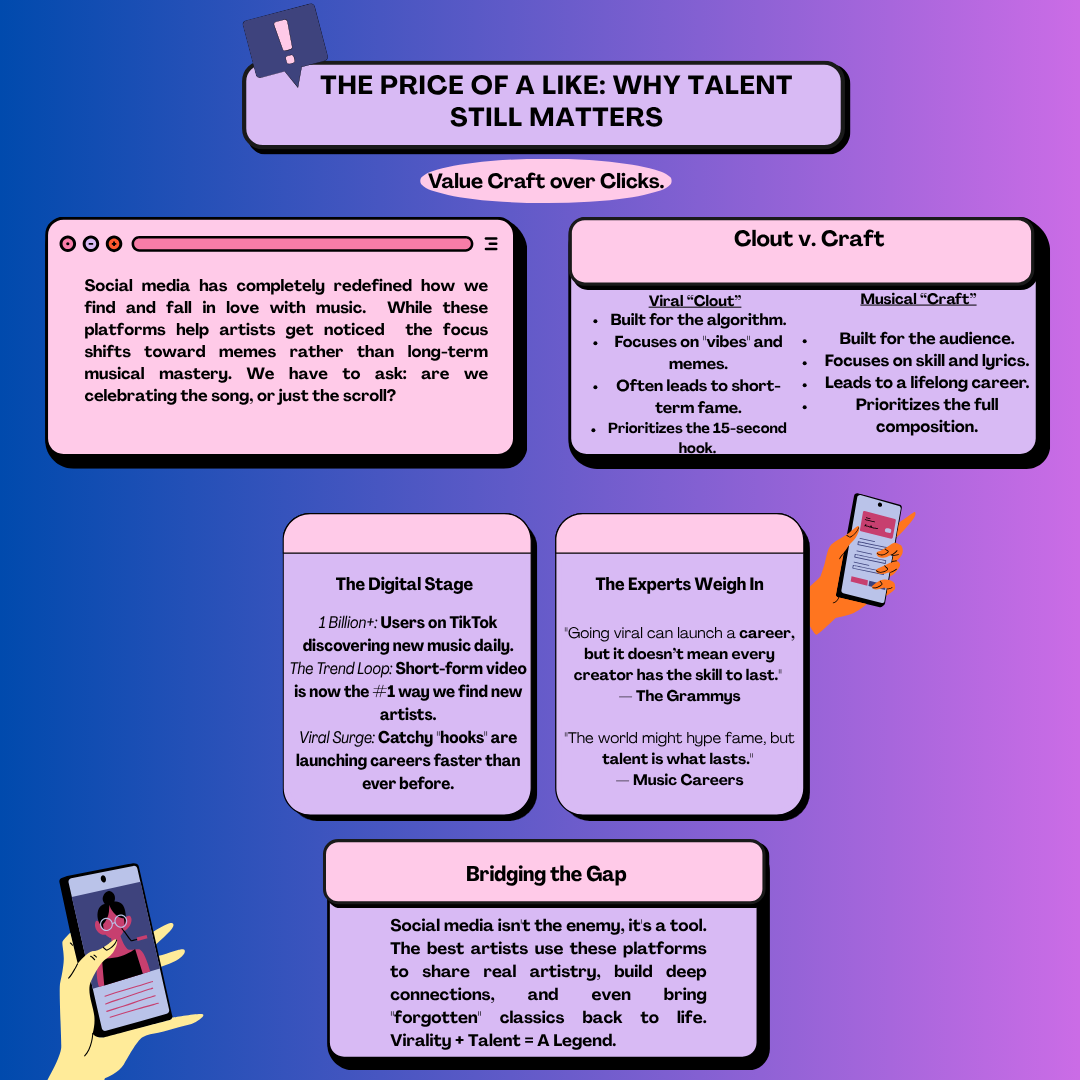
Social media has totally changed how we find and enjoy music. Platforms like TikTok, Instagram Reels, and YouTube Shorts are now where most people first hear new songs, with studies showing that a huge percentage of music listeners discover new artists through short-form video content and social feeds. TikTok alone has over a billion users and music plays a huge role in nearly all of the most viewed clips. These apps help artists get noticed faster than ever before, and many songs that go viral on social media climb the charts because of those trends, according to Little Black Book online.
But there’s a downside. Because virality and follower counts drive attention, record labels and streaming charts sometimes reward artists for short, catchy bits that fit a meme instead of rewarding artists who spend years honing their craft. Many people now judge a song’s worth by how many likes or views it gets, not by the heartfelt lyrics or real musical talent behind it. Yes, going viral can launch careers overnight, and some artists have used this to their advantage, but that doesn’t mean every viral creator has the skill to last long in music, according to the Grammys.
However, there is another side to the story: social media doesn’t only push shallow fame. TikTok has helped talented artists reach fans they never would have without it and even brought older or forgotten tracks back into the spotlight. Some artists use these platforms to share real artistry and build deeper connections with audiences, showing that talent and virality aren’t always separate. Even though trends can favor quick fame, many creators prove you can blend skill with smart use of social media.
Still, we should be careful not to let follower counts become the only measure of success. Real music isn’t made to be a 15-second clip, it’s an art form that moves people. If students and artists focus too much on going viral, they might miss out on learning that makes them better musicians for life. True talent takes hard work, discipline, and time, and those are the skills that will keep music alive for generations. The world might hype fame, but talent is what lasts said by Music Careers.
That’s why schools, parents, and music fans should support real music education and opportunities to develop skill, not just follow trends. Let’s celebrate the artists who practice, create, and innovate, not just the ones who get the most views. A good next step is organizing real music showcases at school, encouraging peers to learn instruments, and promoting artists in ways that value craft over clicks. If we demand quality over clout, we can help keep music meaningful and that’s something worth standing up for.