

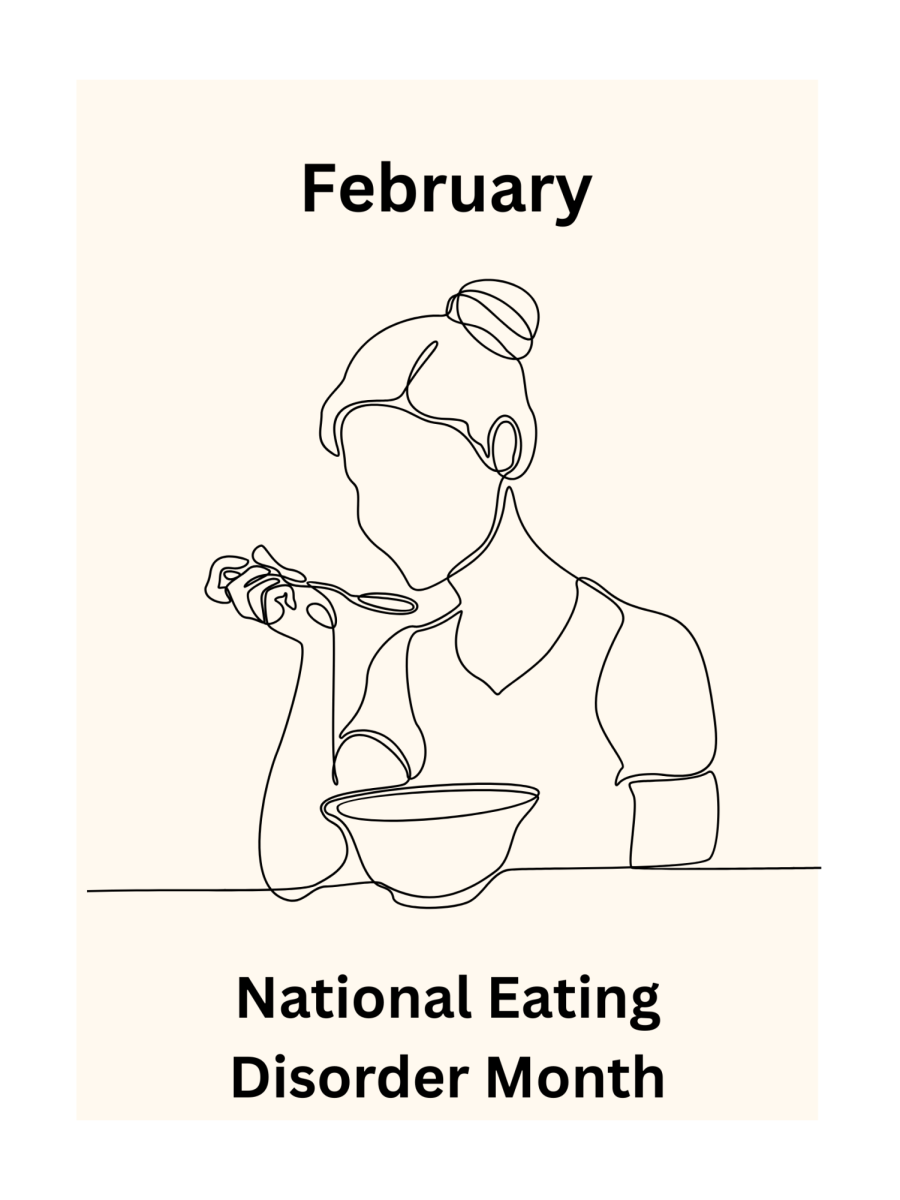
Every 52 minutes, someone dies as a result of an eating disorder. We can bring awareness to this second most fatal mental illness this February, National Eating Disorder Month.
Eating disorders are not just about food or vanity, they are complex mental illnesses. Over 70 million people live with eating disorders and face everyday challenges as a result.
Eating disorders should be treated as urgent mental health conditions, not dismissed as dieting too far or poor self image. As mentioned before, eating disorders can cause lifelong health issues and even be lethal. It is all the more important to be able to identify symptoms in those close to you. It is often difficult to tell if someone has an eating disorder, but there are glaring symptoms.
To identify eating disorders, it is important to understand the main types: anorexia nervosa, bulimia nervosa, and binge-eating disorder. All pose a significant threat to sufferers’ health, but manifest in distinct symptoms.
Anorexia Nervosa is a condition in which patients significantly decrease their food intake. According to the NIH, anorexia can take the form of reduced eating, increased workout regimes, or self-induced vomiting. Those with anorexia typically suffer from poor body image, and often obsess over it. This obsession can lead to irrational comparisons, like thinking no one’s body is bigger than theirs.
Bulimia nervosa is a condition in which people eat large amounts of food at one time, then attempt to get rid of the weight gain by throwing up, taking laxatives, fasting, or through other methods. Like anorexia, bulimia causes significant distress to both the body and mind.
Binge-eating disorder involves eating large amounts of food regularly over a short period of time until one’s stomach feels uncomfortably full. People often describe this condition as feeling “out-of-control”. Binges are sometimes planned in advance, but can happen unexpectedly.
All eating disorders should be treated with patience, care, and understanding. You never know, just by appearance, what a person is going through. Avoid talking about sensitive topics including types of eating disorders to be safe.
For more information about eating disorders, visit National Eating Disorder Association. If you, or someone you know are struggling with food intake, talk to a certified therapist, nutritionist, or trusted adult. Teachers, nurses, and counselors are also credible resources. You are not alone.